I had a garden tour from Albany, NY visit my garden and the Peterborough public gardens on Wednesday. We are having a severe drought here in New Hampshire but the garden has held up reasonably well. Here are some photos of the garden and some plant IDs for the visitors.


Dahlia 'Happy Single Juliet' is turning out to be one of the few dahlias that I can rely on in southern New Hampshire. It is sturdy and produces many single bright pink flowers that pop visually in the garden against the dark foliage. There are other colors of single anemone-type dahlias in the 'Happy' series that I am thinking of trying next year.

I got this gomphrena called 'All Around Purple' from Helen O'Donnell at Bunker Farm in Dummerston, VT. Helen propagates an exciting list of plants each year. You can find her plant list for 2016 here. She specializes in unusual plants, many of which she learned about at her time gardening for Fergus Garrett at Great Dixter.


This is Clematis tangutica 'Bill MacKenzie' in the crabapple tree in the Upper Garden. I have noticed several seedlings of this clematis in the garden which I will let grow to see what the progeny look like.


Here is another Helen O'Donnell plant, a variegated kiss-me-over-the garden-gate called Persicaria orientalis "Shiro gane Nishiki'. It is just beginning to flower but the foliage has been an eye-catching feature throughout the season. I will be getting this plant again next year!

Melanthus major is my all-time favorite annual for the garden. The pleated glaucous foliage smells like peanut butter when it is rubbed but its best attribute is that it gets bigger and better throughout the season and survives the first wave of light frosts in autumn.


Finally, a volunteer seedling of Nicotiana sylverstris. This fragrant tobacco plant lands exactly where I need it every year. This time, it emerged from the brickwork at a corner of the Lower Garden that wasn't quite living up to expectations. Nicotiana sylverstris always exceeds expectations wherever it pops up. The huge, and oddly sticky, foliage is a dramatic feature that quickly identifies this plant as being from the tobacco tribe. I am a big fan of self-seeding nicotianas in the garden. I probably have 7 or 8 different species and/or cultivars, many of them are also intoxicatingly fragrant.

The Lower Garden from the terrace

Lower Garden head-on from the opposite direction

From another angle in the Lower Garden

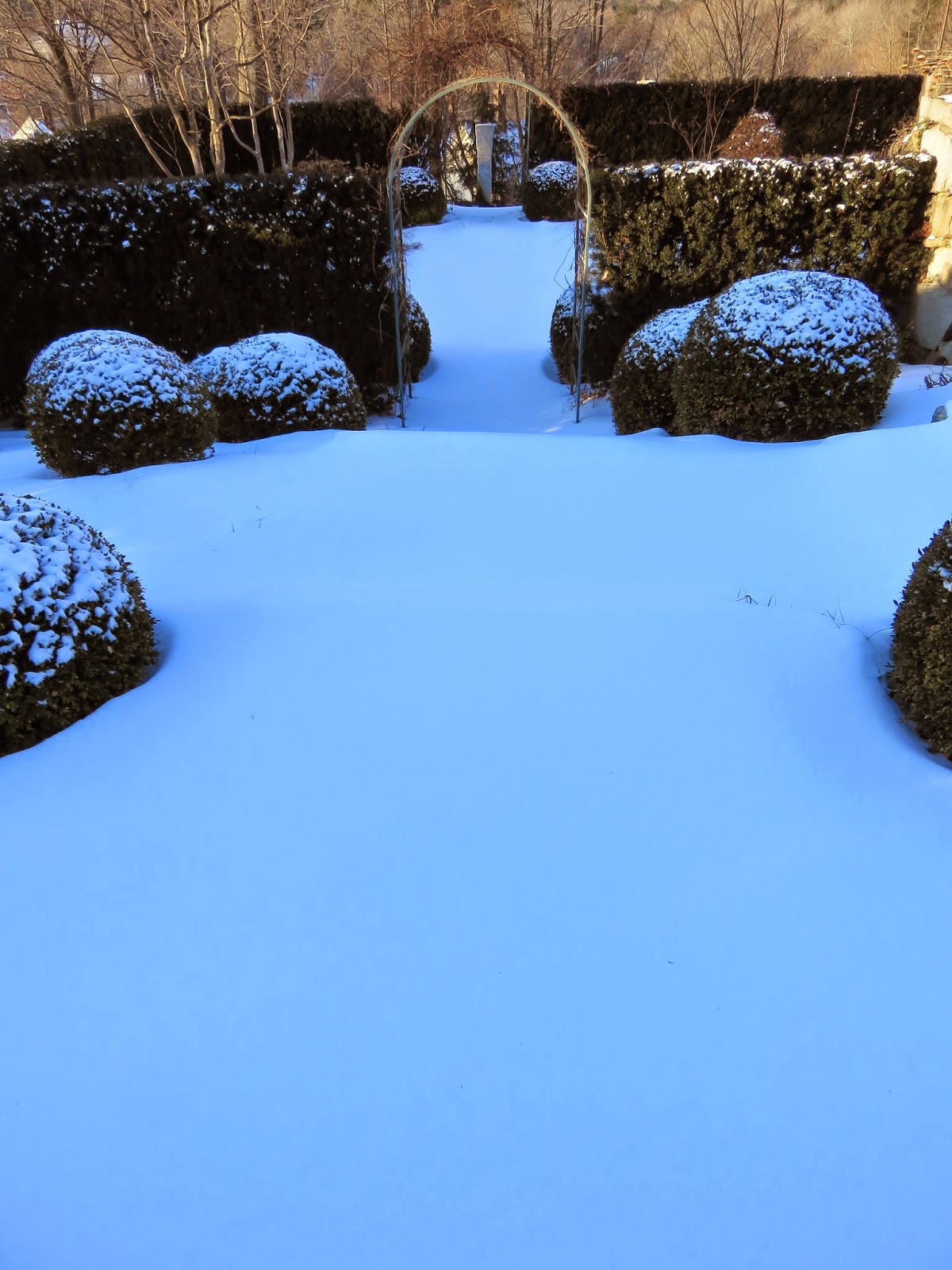
The granite, yew and boxwoods in the Hall with Balls illustrates how strong structure in the garden can be very useful during a drought as well as in winter.

'Peterborough' Adirondack chairs in the Woodland Garden


Dahlia 'Happy Single Juliet' is turning out to be one of the few dahlias that I can rely on in southern New Hampshire. It is sturdy and produces many single bright pink flowers that pop visually in the garden against the dark foliage. There are other colors of single anemone-type dahlias in the 'Happy' series that I am thinking of trying next year.

I got this gomphrena called 'All Around Purple' from Helen O'Donnell at Bunker Farm in Dummerston, VT. Helen propagates an exciting list of plants each year. You can find her plant list for 2016 here. She specializes in unusual plants, many of which she learned about at her time gardening for Fergus Garrett at Great Dixter.

I let this tuberous begonia called 'Sparks Will Fly' go dormant in my basement last year and it came back beautifully. I love the tangerine-colored flowers against the lightly-veined dark foliage.

This is Clematis tangutica 'Bill MacKenzie' in the crabapple tree in the Upper Garden. I have noticed several seedlings of this clematis in the garden which I will let grow to see what the progeny look like.

I never tire of the fresh foliage of Amicia zygomeris. I may attempt taking cuttings this year. I found some excellent instructions, again from Great Dixter, on how to do it here.

This annual red-leafed hibiscus called 'Mahogany Splendor' is also from Helen at Bunker Farm. By the end of the season, it turns into a robust shrub which looks a dwarf Japanese maple.

Here is another Helen O'Donnell plant, a variegated kiss-me-over-the garden-gate called Persicaria orientalis "Shiro gane Nishiki'. It is just beginning to flower but the foliage has been an eye-catching feature throughout the season. I will be getting this plant again next year!

Melanthus major is my all-time favorite annual for the garden. The pleated glaucous foliage smells like peanut butter when it is rubbed but its best attribute is that it gets bigger and better throughout the season and survives the first wave of light frosts in autumn.

Cuphea llavea 'Bat Face' is a useful front-of-the-border plant that looks great for an extended season with little effort and no dead-heading.

Mina lobata 'Exotic Love', aka the firecracker vine, again from Helen

Finally, a volunteer seedling of Nicotiana sylverstris. This fragrant tobacco plant lands exactly where I need it every year. This time, it emerged from the brickwork at a corner of the Lower Garden that wasn't quite living up to expectations. Nicotiana sylverstris always exceeds expectations wherever it pops up. The huge, and oddly sticky, foliage is a dramatic feature that quickly identifies this plant as being from the tobacco tribe. I am a big fan of self-seeding nicotianas in the garden. I probably have 7 or 8 different species and/or cultivars, many of them are also intoxicatingly fragrant.