

View of the Atlantic Ocean from Stonehurst East near Blue Rocks, Nova Scotia

View of Hirtles Beach from near Shobac with Drumlin in the Far Distance
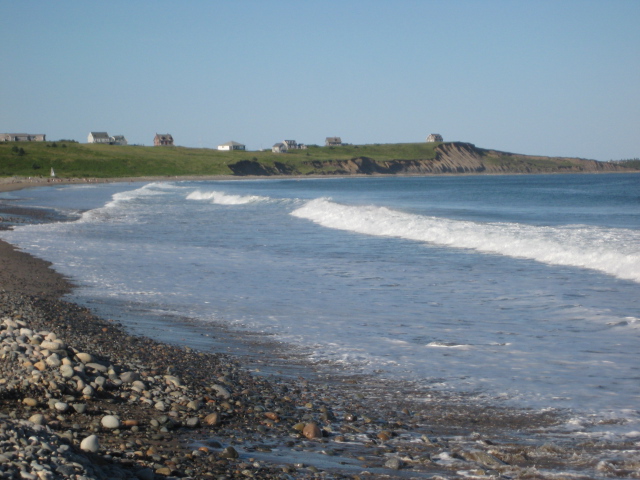
Hirtles Beach one of Nova Scotia's finest sandy beaches.

Eroding Drumlin at Hirtles Beach

View of the Atlantic Ocean with a Pond in the Foreground

Another View of Hirtles Beach from Shobac

Ferns and Grasses Mingle in Drifts with Spruces Beyond

A Field and Shrubs

The Rocky Berm at Hirtles Beach

The Beach helped me understand why the Late Derek Jarman's Garden in Dungeness, on the Coast of the English Channel, looked the way it did

This is the first time I have seen Artemesia growing in the Wild

A Field of Grasses and Thistles

This Field Reminded me of the Cover of Henk Gerritsen's book Essay on Gardening
Glaciers advancing about 15,000 years ago, shaped the landscape surrounding Shobac in the South Shore Region of Nova Scotia. As the glaciers advanced, they flattened the land down to the bedrock. Centuries later, the retreating glaciers deposited stones and soil and formed a series parallel hills called drumlins. Over time, the drumlins have been eroded at their bases by the sea and from the cliff tops by bleeding groundwater. Each winter, the soil from the drumlins is carried out to sea and sand is redeposited in the summer. Sandy beaches are produced on ridges formed by stones that have rolled out of retreating drumlins creating in ecologically diverse and beautiful landscape.


