The gardener's eye

The Gardener's Eye

Showing posts with label Christopher Lloyd. Show all posts

Wednesday, June 17, 2015

The Boccelli Garden in Mid-June


When the Peony 'Peter Brand' comes into bloom, the Boccelli Garden pops with excitment. I especially like the contrast of the chartreuse leaves of Catalpa bignonioides 'Aurea' and the orange flowers of Euphorbia griffithii ‘Dixter’, a selection made by the late Christopher Lloyd of Great Dixter.


Another Great Dixter plant in the Boccelli Garden brought to the United States by Dan Hinkley of Heronswood fame is Ribes alpinum 'Aurea', which can be seen in the center of this photo. Hinkley brought back a suckering stem of the plant at Great Dixter and propagated it for sale in 2004. I got great pleasure out of seeing the original plant at Great Dixter when I was there last month.


Saturday, April 19, 2014

Editing a Mixed Border: It is All About Scale


The Boccelli Garden is mixed border that is now about 14 years old. It contains a mixture of shrubs, small trees, perennials, biennials, annuals and bulbs. The garden is modeled after the planting style used in many English gardens and in particular the succession planting style used by the late Christopher Lloyd, and continued with great finesse by Fergus Garrett, at Great Dixter. The idea is to have the maximum effect for as long of a season as possible.

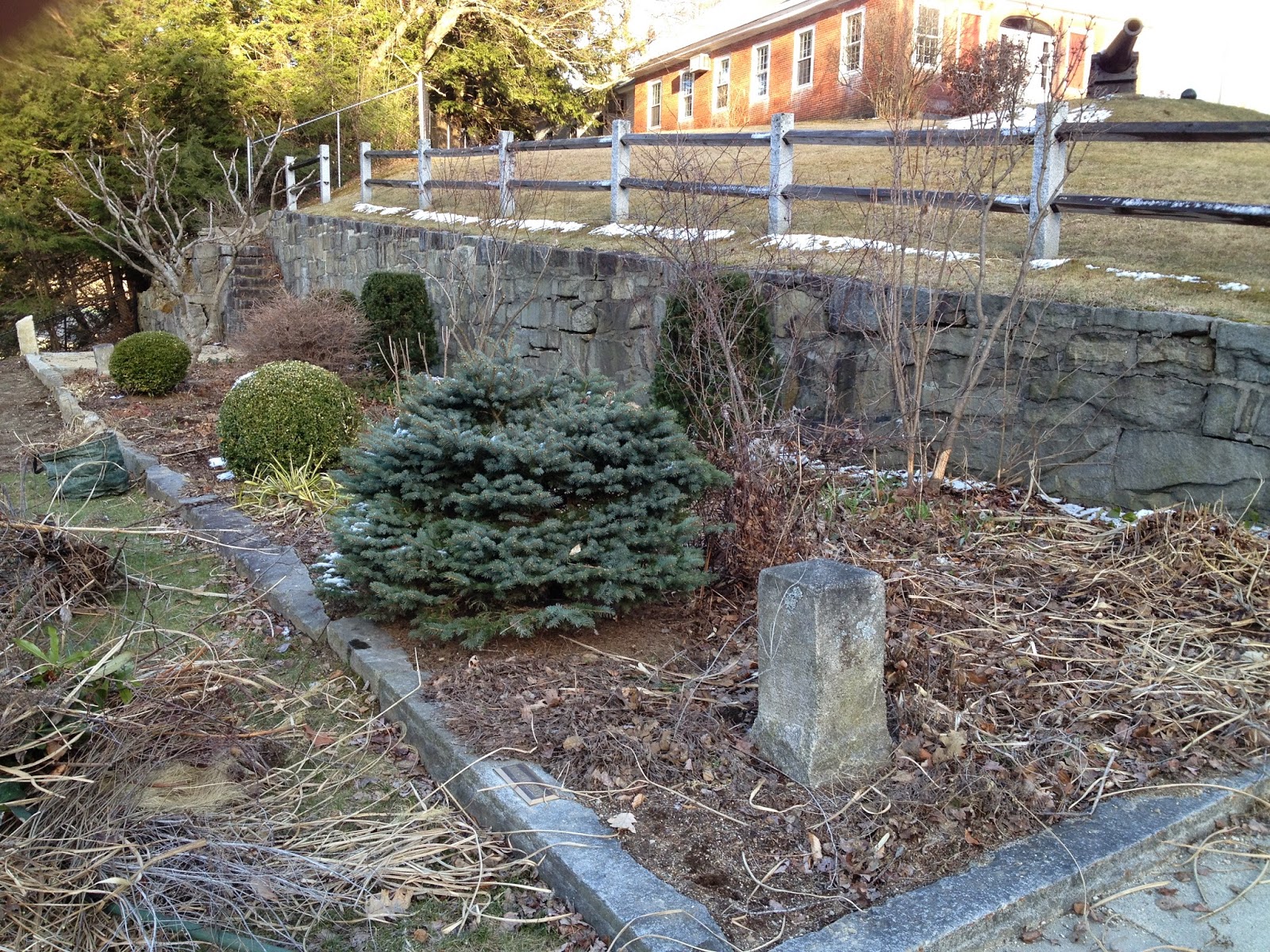
The blue spruce in the foreground at the Boccelli garden is a dwarf cultivar called Picea pungens 'Glauca Globosa'. It was planted in 2001 and has been a wonderful textural, as well as color, component to the garden, but after a decade it has grown too large, is out of scale with the planting and is occupying too much space.


I would have never considered removing it until I read a passage from an old Guardian article called Favorite Trees in Lloyd's book Cuttings: A Year in the Garden with Christopher Lloyd. Lloyd talks about his use of the Korean silver fir, Abies koreana, as a mixed border plant. He admires the "upright cones like short purplish candles on top of its horizontal branches" but "when it grows too large for its position" he "starts again with another youngster." He advises to use the top of the old one as a Christmas tree.  Picea pungens 'Glauca Globosa' is too short and stubby to use a s a Christmas tree but if Lloyd gives me his blessing to remove it, I'll give it a try…. but not without some thought….for several years I labored over the decision to take this lovely conifer out of the garden and replace it with a smaller version.


While I was cleaning out the garden this week, I realized how much valuable real estate the blue spruce had taken over and how the surrounding perennials were being crowded out of existence. I also remembered last spring that opportunities to add annuals along the edge of the garden in front of the spruce had slowly vanished over the years.


I walked around the garden as I did my spring duties in the border. I imagined the garden without the spruce or with the spruce replaced with "another youngster" from every angle. Slowly, it became clear to me that this was the year to take action. I started with a few shallow cuts with my hand saw to the trunk and then I got up, reassessed the situation, gathered some courage, laid down in the garden once more and did the deed.


Another shot of the before picture.


It is always shocking when a big change happens in the garden but what I see are the opportunities.

Thursday, September 5, 2013

Peterborough Parks: Different Styles and Influences for Different Parks


The recent rains have breathed life and color back into the parks in Peterborugh. This is the Pavilion Garden at Depot Park. It has a very high proportion of annuals. I think of the waved yew hedges bordering this planting like a gargantuan pot for a huge container planting. It changes dramatically each year.


Susannah, Mollie and Laura stop working long enough to pose for a quick photo.


The planter at Peter's Gate at Depot Park


This garden at Putnam Park is three years old and beginning to fill in nicely.


There is a "block" style of planting used here like Piet Oudolf's earlier work which has influenced this planting. This garden is weighted toward grasses and perennials. One of the few annuals, Verbena bonariensis self seeds throughout the garden.


 The planter at Putnam Park


The Boccelli Garden was influenced by the "succession" planting philosophy of Christopher Lloyd and Fergus Garrett at Great Dixter. There is a mixture of cut-back shrubs, perennials, grasses, annuals, biennials and bulbs in this planting.


Teixeira Park's Ruin Garden has mostly native plants that attract birds, butterflies and pollinators. I think of Teixeira Park as the "wild" park in Peterborough. We tend to let the plants "duke it out" in this garden. Calamagrostis brachytricha, was one of the few exotic plants I used in this garden. Early on, I thought it might take over the garden, but as the other plants have filled in, it has not been able to handle the competition of the natives and is slowly being crowded out.


 The sunny East Garden at Teixeira Park is just a year old. It has a high proportion of native American prairie plants-- again attractive to birds and pollinators. It is looking a bit sparse its first season but thankfully almost all the plants survived the winter.


The new West Garden at Teixeira Park is quite shady. Mostly natives, like the rest of Teixeira Park, it has a very wild feel to it. Both the East and West Gardens incorporate a "blended" style of planting much like Piet Oudolf's most recent work.

Wednesday, May 25, 2011

Keeping the Great in Dixter

One of the Cadre of Young Gardeners at Great Dixter

The Long Border which is the Model for the Planting at Boccelli Garden in Peterborough, NH

My Favorite Garden that Day: The High Garden

The Ever-changing Array of Potted Plants Flanking the Front Door

The Yew Gate to the Sunk Garden

The Peacock Garden

The Topiary Lawn

While the tower-room at Sissinghurst is frozen in time, things at nearby Great Dixter, the eclectic garden of the late Christopher Lloyd, are buzzing with vitality. In the last five years since Llloyd died, Fergus Garrett, the head gardener, has been maintaining and developing the gardens at Great Dixter at the highest level. Every corner you turn, there is a young and enthusiastic gardener tending to the plants. It is clear that the Great Dixter is continuing "to inspire and educate and provide opportunities for all people to experience intensive and experimental horticulture" as dictated by The Great Dixter Charitable Trust.

Wednesday, March 24, 2010

Getting the Boccelli Garden Ready

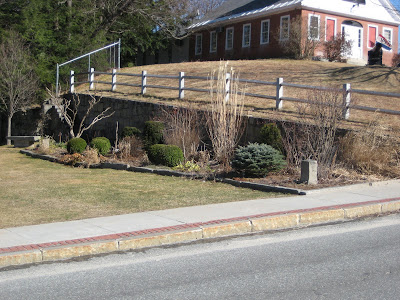
Boccelli Garden Before

Boccelli Garden After

Viburnum sargentii ' Onondaga' and Rosa rubrifolia in foreground

Catalpa bignonioides 'Aurea' and Gleditsia 'Ruby Lace' in foreground

Hydrangea paniculata 'Pink Diamond', Cotinus coggygria 'Royal Purple', center,

and Salix purpurea ' Nana', right

Ribes alpinum 'Aureum' with box balls and yew pillars
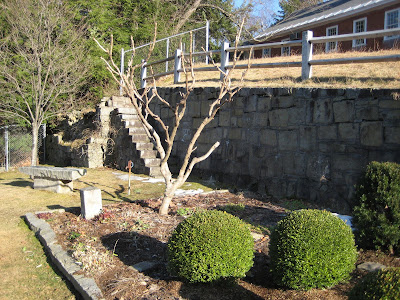
Aralia elata 'Aureovariegata'


Miscanthus floridulus 'Giganteus


The Boccelli Garden, a mixed border, was cleared and prepared for the growing season. All the spent stems of the perennials were cut back. The leaves of the hellebores were removed to make way for the emerging flowers. The large grasses, Miscanthus floridulus 'Giganteus' and Miscanthus sinensis 'Silver Shadow' were cut to the ground. The rigid 8 foot long stems of Miscanthus floridulus 'Giganteus' are stored because they make excellent supports when staking plants during the growing season.

Three trees or large shrubs, Catalpa bignonioides 'Aurea', Gleditsia 'Ruby Lace' and Cotinus coggygria 'Royal Purple', are stooled, each to about 18 inches, to encourage robust new foliage. The catalpa leaves are huge chartreuse paddles that contrast well with the small leaflets of the purplish bronze compound leaves of the honeylocust tree. The rich maroon-red foliage of the smoke bush looks stunning against any foliage or flower color imaginable. In general, red, chartreuse and grey foliage are effective mixers with both hot and cool color schemes.

The seven foot tall Viburnum sargentii 'Onondaga' was limbed up so its branches do not overpower the underlying perennials. It was chosen for this border for its velvety maroon young foliage, creamy white flowers and red fall fruit. The old black stems of Rosa rubrifolia were thinned out to encourage new growth from the ground. The foliage has a beautiful grey color with a copper cast to it; the pink flowers are an added bonus.

The Ribes alpinum 'Aureum' was shaped slightly. Dan Hinkley, the famous plant hunter and founder of Heronswood Nursery, described this currant in the 2000 catalogue: "I have brought this back from England on three occasions, each time from suckering stems offered by Christopher Lloyd while walking his remarkable, cherished Dixter, and each time, but the last, losing the plant. Finally, we have this established in our garden, and finally we are able to offer but a few, with small brilliant yellow foliage (fading to lime as the season progresses), on stems forming compact mounded shrubs 4 ft. by 4 ft., in full sun and well-drained soil. For no extra fee, the magic of Dixter is eternally bound to each and every plant." Well, that sold me!!!

Finally, several dead or damaged branches of the Aralia elata 'Aureovariegata' were removed. This connoisseur's small tree has a bold winter skeleton and large compound leaves with golden edges. This particular specimen is the largest and happiest I have ever seen in a garden. To be quite honest, I am not sure why. I have killed the same plant in my own garden.

Now the garden is ready for the season to begin. You can see the Boccelli Garden in its full glory in the slideshow on the sidebar. Christopher Lloyd's book, Succession Planting for Year-round Pleasure, is an excellent resource on how to build your own mixed border.

LinkWithin

Related Posts with Thumbnails